On May 17, 2025, Researcher Zhang Haibin from the Institute of Deep-sea Science and Engineering, Chinese Academy of Sciences (Sanya), visited the College of Marine Biology and Aquaculture, Hainan University, at the invitation of Researcher Xin Yi, to conduct academic exchange activities.
During the visit, Researcher Zhang Haibin gave a special academic report titled "Deep-sea Benthic Biodiversity and Environmental Adaptation." The report systematically introduced major progress in China's deep-sea exploration field, particularly relying on the "Fendouzhe" (Striver) manned submersible. The Institute of Deep-sea Science and Engineering, CAS, has completed deep-diving scientific expedition missions to the world's five major trenches, acquiring a large number of precious deep-sea biological samples. Researcher Zhang Haibin elaborated on the adaptation mechanisms of deep-sea organisms to extreme environments and their resource development potential, providing an important scientific basis for exploring the sustainable use of deep-sea biological resources. The report aroused strong interest among faculty and students. Both sides engaged in heated discussions and in-depth exchanges on frontier issues such as deep-sea life sciences, extreme environment adaptation mechanisms, and biological resource mining, creating a strong academic atmosphere on site.
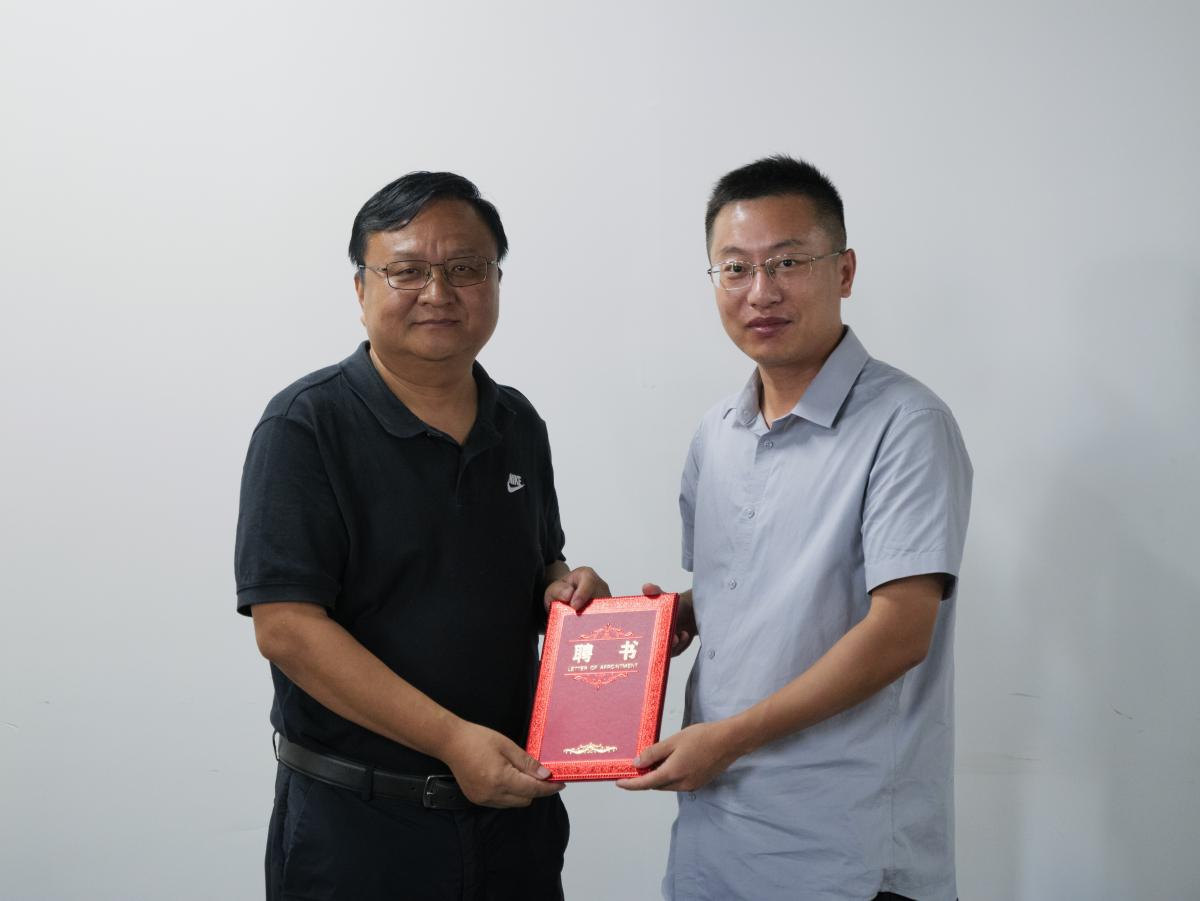
After the exchange, Vice Dean Lu Yandu presented Researcher Zhang Haibin with a letter of appointment as an expert for the Graduate Academic Forum on behalf of the College, thanking him for his active support for the scientific research development and talent cultivation work of the College of Marine Biology and Aquaculture, Hainan University.
Researcher Zhang Haibin has long been engaged in deep-sea biology research. He was selected for the "Hundred Talents Program" of the Chinese Academy of Sciences in 2013, selected as a "Nanhai Famous Expert" of Hainan Province in 2020, and recognized as a Class B Talent by the Talent Development Bureau of the Hainan Provincial Committee in 2024. Over the years, he has participated in major national deep-sea scientific expedition missions multiple times and has dived in the "Shenhai Yongshi" (Deep Sea Warrior), "Jiaolong," and "Fendouzhe" manned submersibles to conduct deep-diving operations in waters such as the South China Sea, the Southwest Indian Ocean, and the Mariana Trench, reaching a maximum depth of 10,901 meters in the abyss. He has achieved a series of important research results in fields such as deep-sea biodiversity and evolution, extreme environment adaptation mechanisms, and resource development. He has published more than 70 papers in internationally renowned journals such as Cell, Science Advances, and Trends in Genetics, and presided over national-level and provincial/municipal-level research projects, including National Key R&D Programs.
This visit not only deepened mutual understanding and cooperation in the field of scientific research but also laid the foundation for future cooperation in directions such as the development and utilization of deep-sea biological resources.
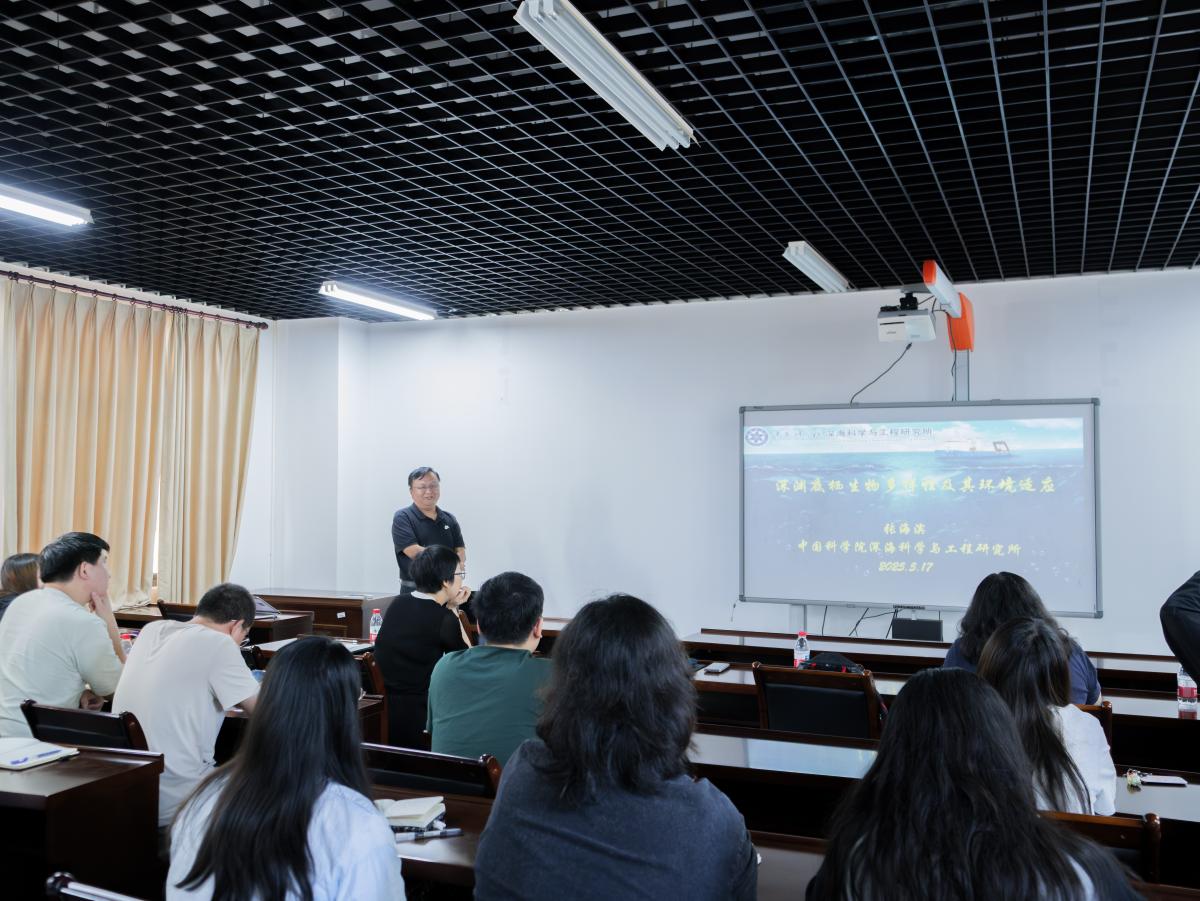
(Caption) Researcher Zhang Haibin at the report site
(Caption) Researcher Zhang Haibin at the report site