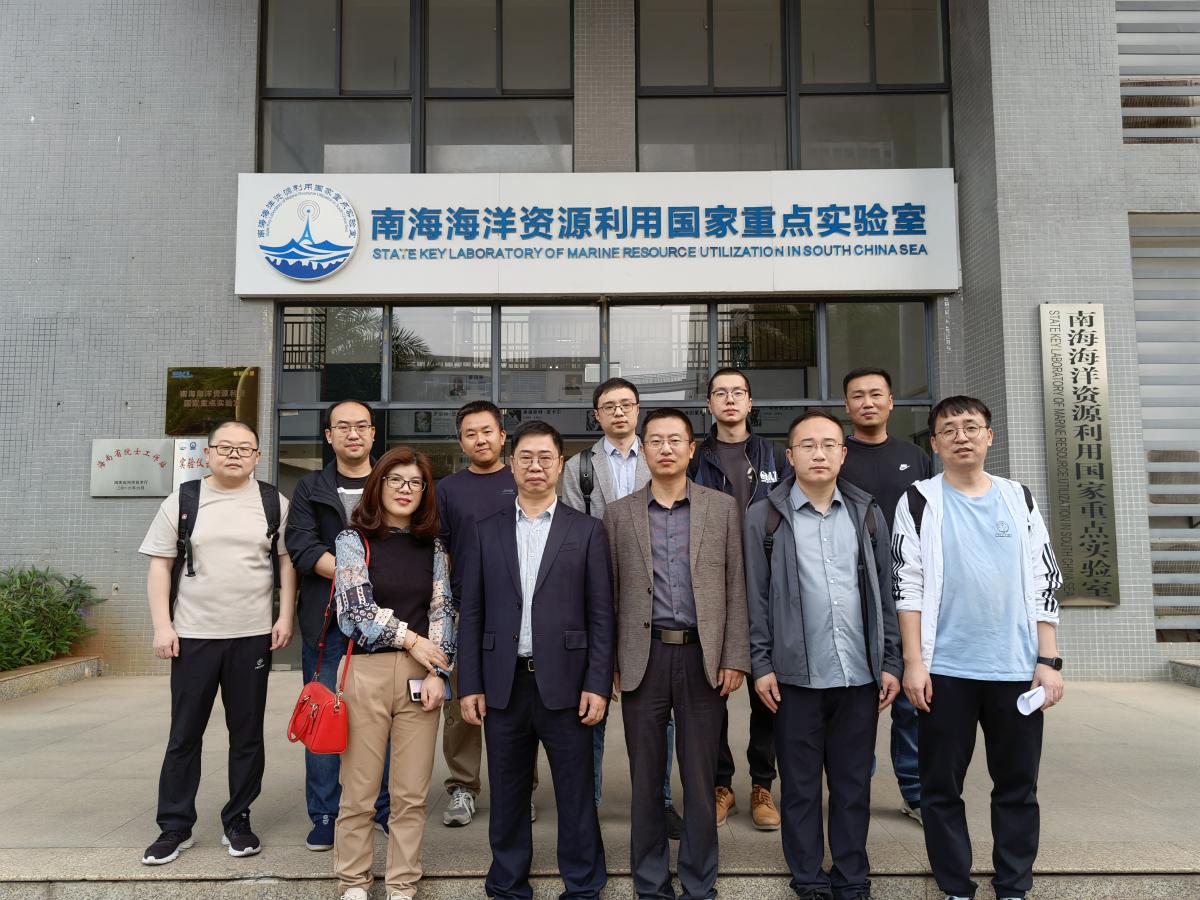
On March 4, a group of experts and scholars from China Aerospace Science and Industry Corporation Limited (CASIC), Qingdao Institute of Bioenergy and Bioprocess Technology (QIBEBT) of the Chinese Academy of Sciences (CAS), Yellow Sea Fisheries Research Institute (YSFRI) of the Chinese Academy of Fishery Sciences (CAFS), and Jiangnan University visited SCBE. Professor Lu Yandu and Researcher Xin Yi accompanied the visit and reported on SCBE's work in instruments and equipment, funding investment, external exchanges, and scientific research innovation.
Subsequently, the expert group also visited the State Key Laboratory of Marine Resource Utilization in South China Sea.
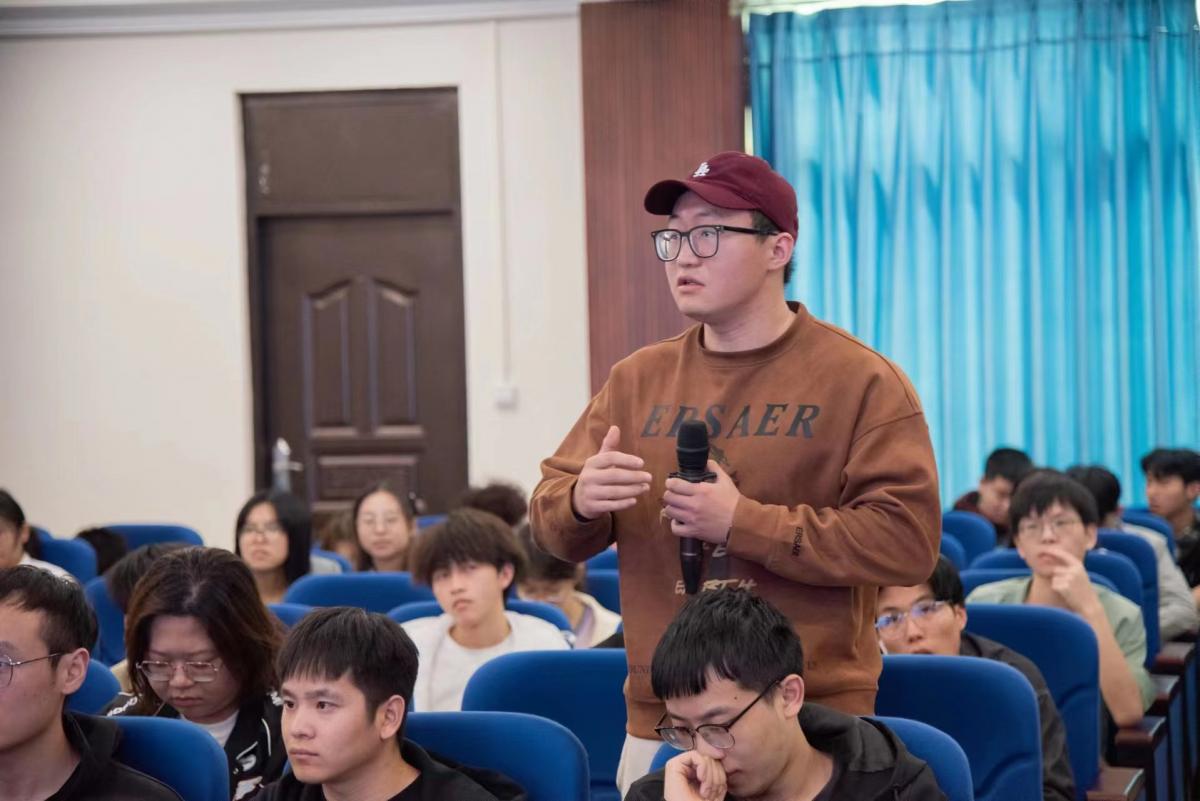
On that day, Researcher Liu Tianzhong from QIBEBT CAS gave a wonderful report titled "Microalgae Biotechnology—Opportunities, Challenges, and Research Progress" to the teachers and students. He had enthusiastic exchanges with teachers and students from the College of Marine Sciences, the College of Food Science and Engineering, and the State Key Laboratory of Marine Resource Utilization in South China Sea.
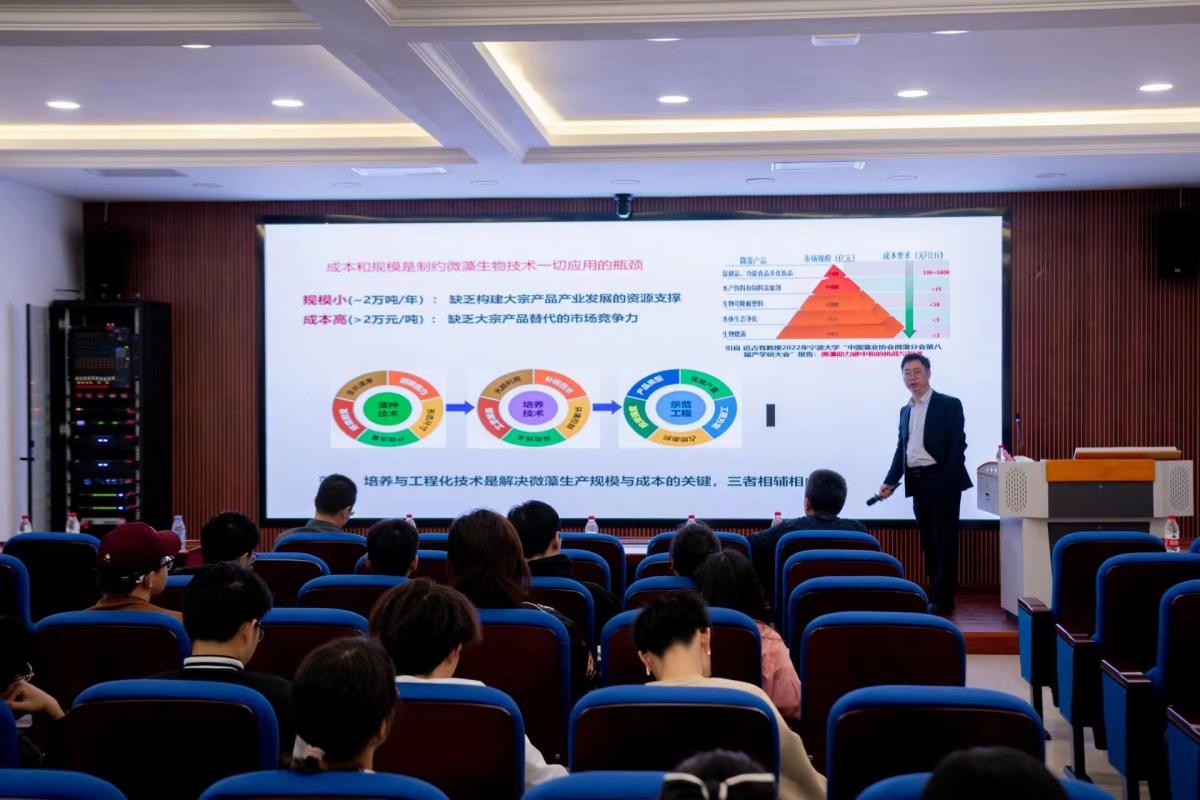
The report centered on the opportunities, challenges, and research progress of microalgae biotechnology. Researcher Liu Tianzhong first introduced the opportunities of the microalgae industry: as photosynthetic autotrophic microorganisms, the theoretical yield of microalgae biomass is 10-50 times that of higher plants; microalgae have strong tolerance to water bodies and can be cultivated in fresh water, brackish water, seawater, and wastewater; in addition, microalgae have rich metabolite compositions, containing various oils, proteins, and sugars. Therefore, microalgae can be applied to build a cluster industry integrating carbon fixation, energy, and food, such as plant protein and artificial meat, microalgae-based and vegetable oils, functional nutritional foods and medicines, aquatic feed, and water quality regulation.
In addition to opportunities, Researcher Liu Tianzhong also pointed out that cost is still a key bottleneck restricting the application of microalgae biotechnology. Strain breeding, cultivation technology, and engineering technology provide possibilities for breaking through this bottleneck. Focusing on the development of the whole industrial chain of Tribonema, a eukaryotic filamentous oleaginous microalga with excellent engineering traits, Researcher Liu Tianzhong introduced the work carried out by his research group in germplasm breeding, optimization of high-efficiency cultivation processes, and development of high-value products. In particular, the attached cultivation method has broken through the traditional large-waterbody suspension culture mode, significantly improved cultivation efficiency, and has the advantages of water saving, energy saving, and easy harvesting.
The report meeting ended with warm applause. After the meeting, Researcher Liu Tianzhong had enthusiastic exchanges with teachers and students.
Dr. Liu Tianzhong is a researcher and Deputy Director of the Key Laboratory of Biofuels, Chinese Academy of Sciences, and Deputy Editor-in-Chief of Marine Sciences. For more than ten years, he has been dedicated to applied basic research and key technology development of microalgae biotechnology. These include: 1. Microalgae germplasm engineering: Discovered and systematically studied high-oil-yielding Tribonema, proposing the concept of filamentous engineering microalgae; 2. Microalgae synthetic biology: Established the multi-gene genetic transformation platform for Tribonema for the first time; successfully achieved heterotrophic modification of Phaeodactylum tricornutum taking it as an example; 3. Microalgae high-efficiency cultivation technology and microalgae carbon fixation: Proposed and established microalgae biofilm attached cultivation technology, and established microalgae flue gas CO2 fixation technology; 4. Microalgae high-value utilization: Established microalgae heterotrophic cultivation technology, realizing high-density heterotrophic production of omega-7 fatty acids by Tribonema/yeast, established high-efficiency cultivation technology for Haematococcus pluvialis to produce astaxanthin, and achieved industrialization. In the past ten years, he has presided over and undertaken more than 30 projects including the 863 Program, National Science and Technology Support Program, National Key Research Program, and National Natural Science Foundation of China, and established technical cooperation with Boeing, Total, and multiple domestic enterprises. He has published more than 90 research papers in Chemical Engineering J, Bioresource Technology, Algal Research, Biotechnology for Biofuels, etc., and applied for more than 30 authorized invention patents.