DHA and EPA among Omega-3 very long-chain polyunsaturated fatty acids are essential nutrients for the human body. Among them, DHA is crucial for the brain nerve growth and development and visual development of infants and young children. Appropriate daily supplementation of DHA helps increase DHA levels in children's brains, thereby benefiting the healthy development of brain nerves and vision. EPA is commonly known as the "vascular scavenger" for humans. High-purity EPA helps reduce cholesterol and triglyceride levels, promotes the metabolism of saturated fatty acids in the body, thereby reducing blood viscosity, improving blood circulation, providing oxygen to tissues to eliminate fatigue; preventing fat deposition on blood vessel walls, preventing the formation and development of atherosclerosis, and preventing cardiovascular diseases such as cerebral thrombosis and hypertension. However, the current main source of EPA is wild marine fish. This traditional source is unsustainable due to potential pollution risks in the marine environment and overfishing of fish resources. Microorganisms such as marine algae are primary producers of Omega-3 very long-chain polyunsaturated fatty acids and possess efficient EPA synthesis mechanisms.
Detailed Content: DHA and EPA among Omega-3 very long-chain polyunsaturated fatty acids are essential nutrients for the human body. Among them, DHA is crucial for the brain nerve growth and development and visual development of infants and young children. Appropriate daily supplementation of DHA helps increase DHA levels in children's brains, thereby benefiting the healthy development of brain nerves and vision. EPA is commonly known as the "vascular scavenger" for humans. High-purity EPA helps reduce cholesterol and triglyceride levels, promotes the metabolism of saturated fatty acids in the body, thereby reducing blood viscosity, improving blood circulation, providing oxygen to tissues to eliminate fatigue; preventing fat deposition on blood vessel walls, preventing the formation and development of atherosclerosis, and preventing cardiovascular diseases such as cerebral thrombosis and hypertension. However, the current main source of EPA is wild marine fish. This traditional source is unsustainable due to potential pollution risks in the marine environment and overfishing of fish resources. Microorganisms such as marine algae are primary producers of Omega-3 very long-chain polyunsaturated fatty acids and possess efficient EPA synthesis mechanisms.
EPA biosynthetic pathways mainly include the aerobic desaturase/elongase pathway and the polyketide synthase (PKS) pathway. Conventional fatty acid desaturases and elongases have different substrate preferences. Usually, the substrate of desaturase is bound to phosphatidylcholine (PC), while the fatty acid substrate utilized by elongase is bound to Coenzyme A. Therefore, the product of desaturase needs to be transferred from PC to Coenzyme A before further elongation reaction, and the next round of desaturation reaction requires the transfer of the elongase product from Coenzyme A to PC. The repeated transport of intermediate products between PC and Coenzyme A is a metabolic bottleneck in EPA and DHA biosynthesis, greatly limiting the content of EPA and DHA in heterologous biosynthesis. Lysophosphatidylcholine acyltransferase (LPCAT) is considered a key enzyme catalyzing the transport of intermediate metabolites between the PC pool and the acyl-CoA pool. Currently, LPCAT-related research has only been reported in plants such as Arabidopsis thaliana. The metabolic bottleneck problem in Omega-3 very long-chain polyunsaturated fatty acid biosynthesis regulated by LPCAT in marine algae has not been reported for many years.
The single-celled marine diatom Phaeodactylum tricornutum can accumulate up to 30% EPA. Due to its excellent annotated genome sequence and mature transformation system, it has been used as a model organism for studying the biosynthesis of long-chain polyunsaturated fatty acids. In Phaeodactylum tricornutum, most EPA accumulates in polar lipids, especially in galactolipids, such as monogalactosyldiacylglycerol (MGDG) and digalactosyldiacylglycerol (DGDG). The biosynthesis of long-chain polyunsaturated fatty acids is thought to start from oleic acid. EPA can be synthesized through a series of desaturation and elongation steps occurring in the endoplasmic reticulum, and then newly synthesized EPA is imported into the plastid via an unknown pathway. The regulatory mechanism of EPA synthesis is the basis for understanding the biosynthesis of long-chain polyunsaturated fatty acids in diatoms.
On October 27, 2022, the research result "Acyl-CoA:lysophosphatidylcholine acyltransferase from the unicellular diatom Phaeodactylum tricornutum (PtLPCAT1) is involved in triacylglycerol and galactoglycerolipid synthesis and enhances eicosapentaenoic acid accumulation in recombinant oleaginous yeast" by Dr. Gong Yangmin from the Oil Quality Chemistry and Processing Utilization Innovation Team of the Oil Crops Research Institute, Chinese Academy of Agricultural Sciences, in collaboration with Polish and French scientists, was published online in the renowned botanical journal Plant Biotechnology Journal (CAS Q1, IF=13.263). It reported the function of lysophosphatidylcholine acyltransferase LPCAT from marine diatom (Phaeodactylum tricornutum) in triglyceride and glycolipid synthesis, and significantly increased the relative content of EPA in the recombinant oleaginous yeast—Yarrowia lipolytica by overexpressing this gene. It provides important genetic resources for using synthetic biology to produce very long-chain polyunsaturated fatty acids in oleaginous microorganisms and oil crops.
Phaeodactylum tricornutum LPCAT is localized on the chloroplast endoplasmic reticulum (cER) membrane. Knockout of the lpcat coding gene via CRISPR/Cas9 technology resulted in significantly reduced triglyceride content under stationary phase and phosphorus deficiency stress conditions, and reduced EPA content in total fatty acids. The accumulation of MGDG and DGDG in different lipid classes of the lpcat mutant was also significantly reduced. The relative contents of 20:5/16:2 and 20:5/16:3 in different molecular species of MGDG were significantly reduced, while the significantly reduced molecular species in DGDG were mainly 20:5/16:0 and 20:5/16:1. To evaluate the biotechnological potential of Phaeodactylum tricornutum LPCAT in increasing EPA yield, the Δ8 fatty acid synthesis pathway was further reconstructed in the oleaginous yeast—Yarrowia lipolytica PO1f, where the relative content of EPA in total fatty acids accounted for 7%. Overexpressing one copy of the LPCAT gene in this recombinant yeast increased the relative EPA content to 12%; interestingly, the relative EPA content in the recombinant yeast overexpressing two copies of the LPCAT gene reached 18%, indicating a positive correlation between LPCAT gene copy number and EPA content. Currently, a national invention patent has been applied for the biotechnological application of this gene.
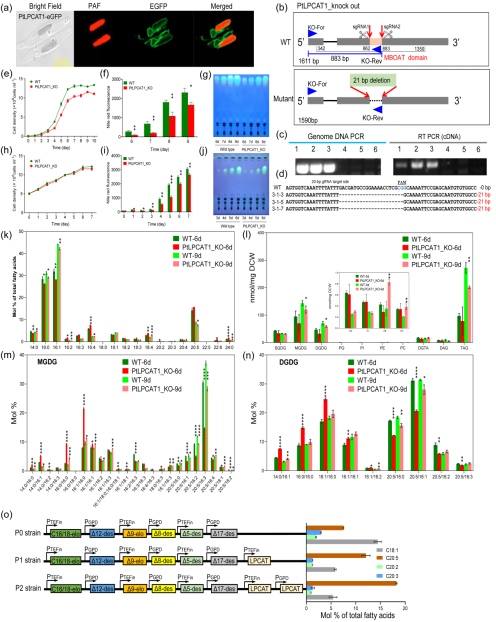
Figure 1: Function of Phaeodactylum tricornutum LPCAT in lipid and EPA synthesis and its biotechnological potential in increasing relative EPA content in recombinant yeast
You Lingjie, a 2019 master's graduate of the Oil Crops Research Institute, Chinese
Academy of Agricultural Sciences, is the first author of the paper, and Gong Yangmin of the Oil Quality Chemistry and Processing Utilization Team is the corresponding author. Professor Antoni Banas of the University of Gdańsk, Poland, and Professors Alberto Amato and Eric Maréchal of the University of Grenoble Alpes, France, participated in this work. This research was supported by the Intergovernmental International Cooperation Project of the National Natural Science Foundation of China and the Innovation Project of the Chinese Academy of Agricultural Sciences.
Original Link:
https://doi.org/10.1111/pbi.13952