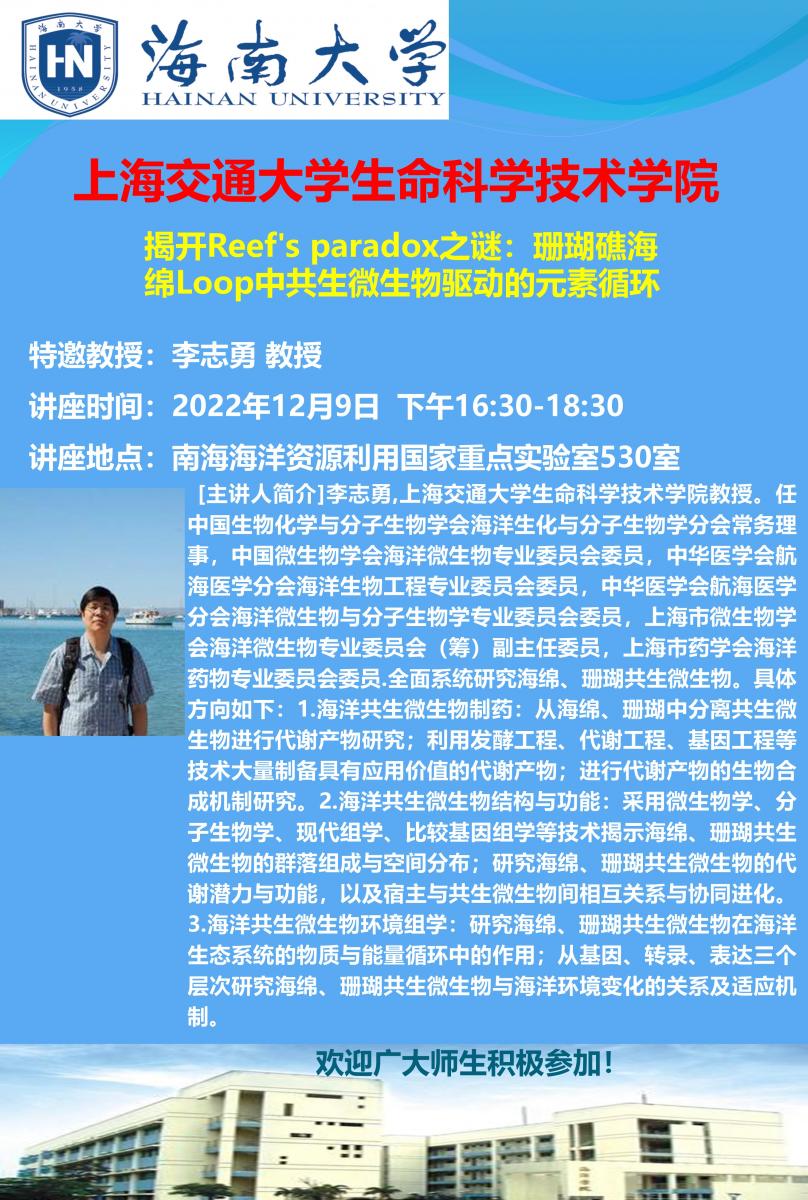
Li Zhiyong, Professor at the School of Life Sciences and Biotechnology, Shanghai Jiao Tong University. He serves as an Executive Director of the Marine Biochemistry and Molecular Biology Branch of the Chinese Society of Biochemistry and Molecular Biology, a member of the Marine Microbiology Professional Committee of the Chinese Society for Microbiology, a member of the Marine Bioengineering Professional Committee of the Chinese Medical Association of Maritime Medicine, a member of the Marine Microbiology and Molecular Biology Professional Committee of the Chinese Medical Association of Maritime Medicine, Vice Chairman of the Marine Microbiology Professional Committee (Preparatory) of the Shanghai Society for Microbiology, and a member of the Marine Drug Professional Committee of the Shanghai Pharmaceutical Association. He conducts comprehensive and systematic research on sponge and coral symbiotic microorganisms. Specific directions are as follows: 1. Marine symbiotic microbial pharmaceuticals: Isolating symbiotic microorganisms from sponges and corals for metabolite research; using fermentation engineering, metabolic engineering, genetic engineering, and other technologies to mass-produce metabolites with application value; conducting research on the biosynthetic mechanisms of metabolites. 2. Structure and function of marine symbiotic microorganisms: Using microbiology, molecular biology, modern omics, comparative genomics, and other technologies to reveal the community composition and spatial distribution of sponge and coral symbiotic microorganisms; studying the metabolic potential and functions of sponge and coral symbiotic microorganisms, as well as the interrelationship and co-evolution between hosts and symbiotic microorganisms. 3. Marine symbiotic microbial environmental omics: Studying the role of sponge and coral symbiotic microorganisms in the material and energy cycles of marine ecosystems; studying the relationship between sponge and coral symbiotic microorganisms and marine environmental changes and their adaptation mechanisms from the three levels of gene, transcription, and expression.